

This story was originally published by Reasons to be Cheerful
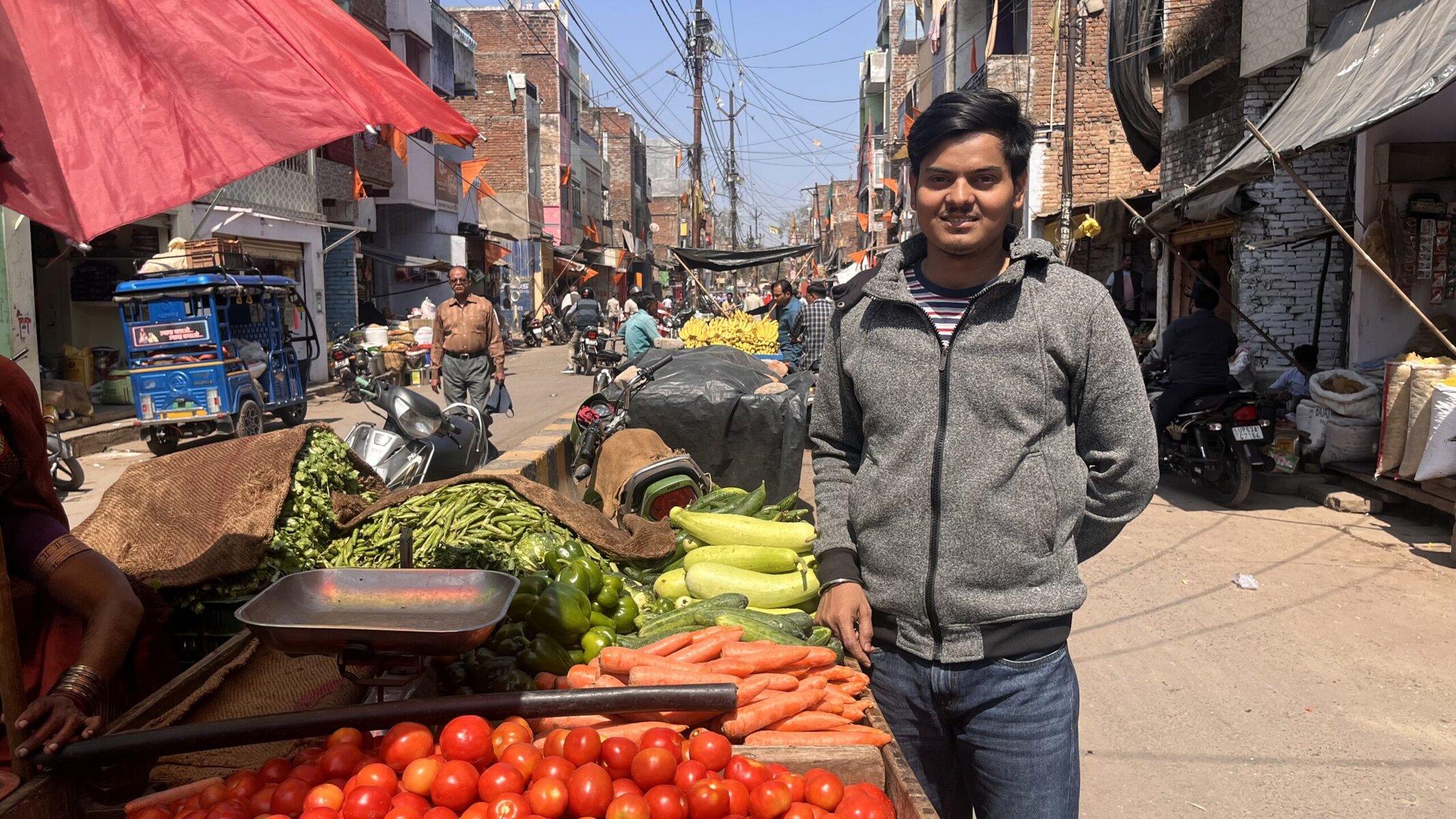
Every morning, Amit Sonkar sets up his little stall in a bustling vegetable market in Mirzapur, a small town on the banks of the Ganges in North India’s Uttar Pradesh. He piles up the tomatoes and carrots in inviting pyramids and lays out the beans, spring onions and green chili peppers in baskets. Once he is satisfied with the array, he sits behind the stall and waits.
“Earlier, I’d have whipped out my phone and seen mindless reels on social media,” he says. But ever since a room behind a tiny shoe shop was converted into the Mirzapur Community Library next door, Sonkar has started reading, not because he has any exam to pass, but “for pleasure,” he says. It is a far cry from his days at school, the class 12 dropout says. “I’m reading a lot of Hindi literature, which takes me to different worlds and helps me to visualize a future beyond this crowded, crazy bazaar,” he says.
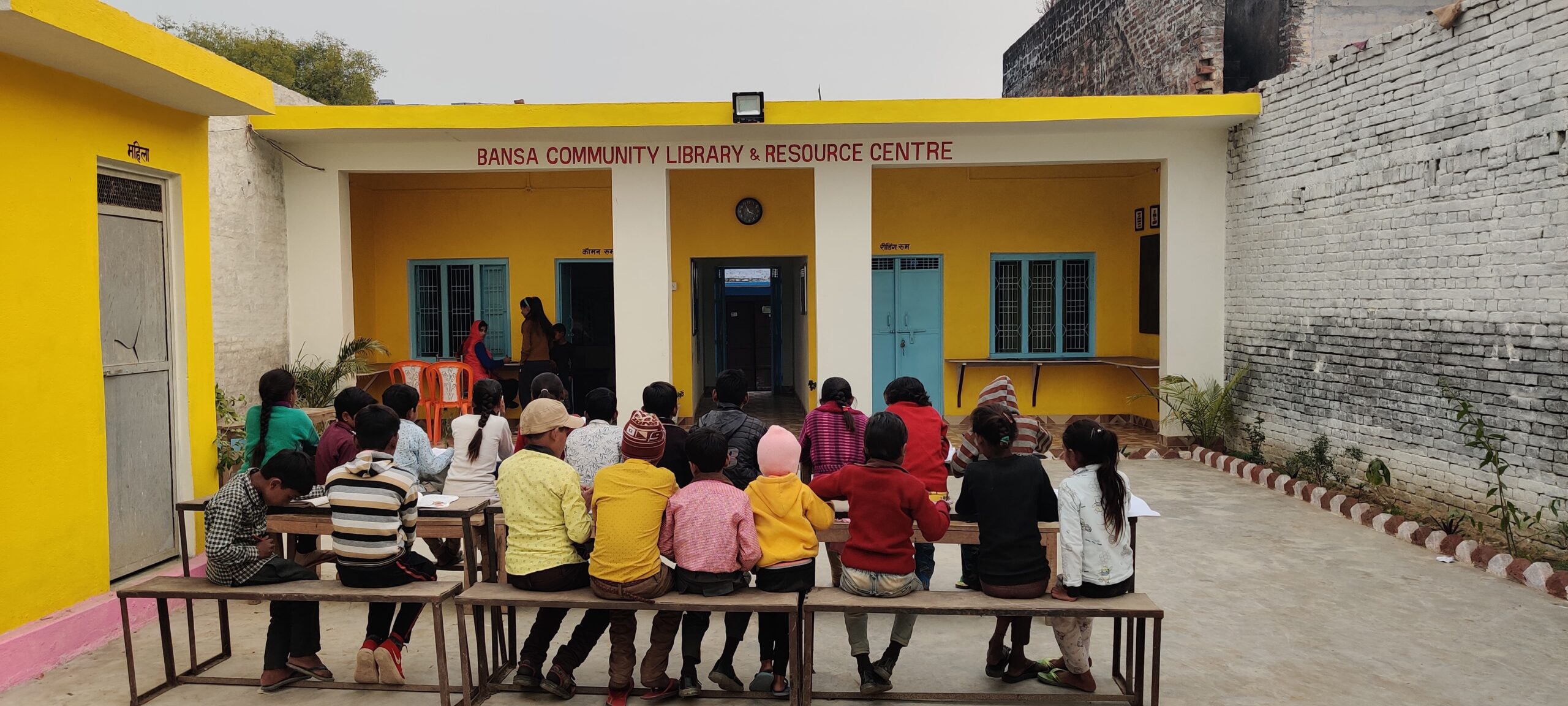
About 250 miles away, in Hardoi, another small town in the state, a community library operates out of the compound of the local temple. Children play with educational toys outside while a free competitive exam preparatory class takes place within. “We never ask people who come to the Bansa Community Library to read,” co-founder Jatin Lalit says. For many new readers, he feels that this could be too much pressure. Instead, they focus on providing a safe, peaceful space with lots of books. “We leave it to our members to choose whether to read, study, play or hone their computer skills.”
Such libraries are unusual for a region where literacy rates are at 68.5 percent (the national average is 77.7 percent), and a national survey found that barely 56 percent of class five students could read a text meant for students in class two. In the developed world, generously funded public libraries make it easy for people to access books. But not in rural India. Uttar Pradesh alone has merely 200 public libraries, but almost 98,000 villages at last count.
To make books more freely available, small community libraries are mushrooming across India. The Community Library Project (TCLP) in Delhi began in 2009 as a book club. It now has four branches in Delhi and gives 4,000 children free access to books. Over 1,000 miles away, NGO Hasiru Dala started the Buguri community library project in 2017 for waste-pickers in Karnataka. In the same state, 17 community libraries called Book Nests operate out of bus stops. Since 2022, the state transport provider Navi Mumbai Municipal Transport has introduced mobile libraries on several long-distance buses in Mumbai.
“The idea of such small community libraries is to make it as convenient as possible for people to pick up a book instead of playing with their phones,” Lalit says. “They are free to use, open to all and most don’t require a membership fee.”
Public libraries exist in some of these rural areas, but people often have trouble accessing them. “Hardoi district has a public library in the district center, but it charges an annual fee and is a long way off from most of the district’s villages,” Lalit points out. But the Free Libraries Network (FLN) — a coalition of free libraries, librarians and library activists in India and South Asia, of which Lalit is the general secretary — believes in free, unfettered access to books for all.
Weighed down by negative news?
Our smart, bright, weekly newsletter is the uplift you’ve been looking for.
Lalit, along with two other friends from a law school in Delhi, started Bansa Community Library in 2020 during the Covid lockdown. “We were helping migrant laborers return to their homes and realized that once home, they had little to do, and no opportunities to better themselves,” he recounts. “Building a free library, a community-owned safe space where they could read or study, seemed like a good idea.”
Near his home in Hardoi, Lalit, now a lawyer who practices in Delhi, convinced a local temple to let them construct two rooms on its land. The library took off with book and monetary donations. It gained initial momentum because the total lockdown had left children (and their parents) with little to do. Today, the library has 2,100 registered members, with over 100 coming every day. Its doors are always open, even at night, especially for students preparing for schools and competitive exams.